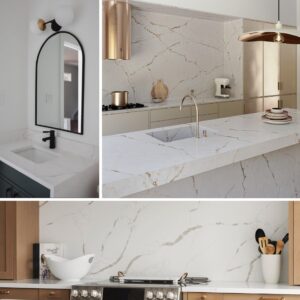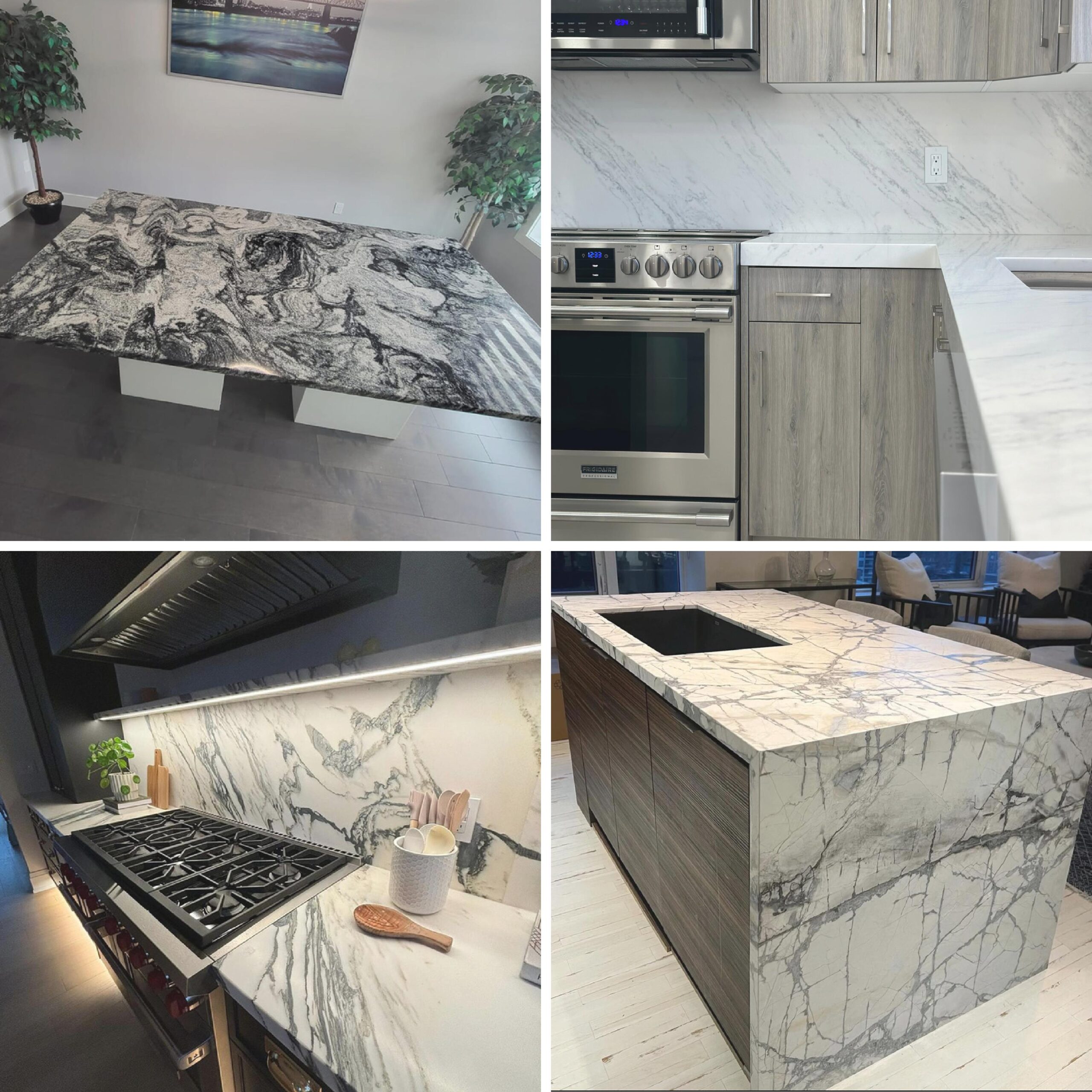
Selecting the right countertop material for your kitchen is a pivotal decision. The choice affects not only the aesthetic appeal of your space but also its functionality and durability. Granite, quartz, marble, and quartzite each offer unique benefits and potential drawbacks. Understanding these options can help you create your ideal kitchen.
Why the Right Countertop Matters
Your kitchen countertop is more than just a workspace. It’s a central feature that sets the tone for your kitchen’s design and influences its usability. The right countertop material can enhance your cooking experience, increase your home’s value, and make maintenance a breeze. Conversely, the wrong choice can lead to frequent repairs, unsightly wear, and frustration. Thus, investing time in selecting the best material is crucial.
A Brief Overview of Countertop Materials
The world of countertop materials is diverse, ranging from natural stones like granite and marble to engineered options like quartz and porcelain. Each material boasts unique properties, aesthetics, and maintenance requirements. Let’s delve deeper into these popular choices to help you make an informed decision.
Granite: The Classic Choice
Granite Origins and Formation
Granite is an igneous rock formed from the slow crystallization of magma beneath the Earth’s surface. This process gives granite its distinctive granular texture and impressive durability. Its natural beauty and strength have made it a favorite for centuries.
Key Characteristics of Granite
Granite is renowned for its hardness and resistance to scratches and heat. Its natural patterns and color variations make each slab unique, offering a one-of-a-kind appearance for your kitchen. Additionally, granite is relatively low-maintenance, requiring only periodic sealing to maintain its luster.
Pros of Granite Countertops
- Durability: Resistant to scratches, heat, and daily wear.
- Aesthetic Appeal: Unique, natural patterns add elegance.
- Longevity: With proper care, granite countertops can last a lifetime.
Cons of Granite Countertops
- Porosity: Can absorb stains if not sealed periodically.
- Cost: Can be expensive, especially high-end varieties.
Popular Granite Color Options
Granite comes in a wide range of colors, from deep blacks and blues to warm browns and reds. Some popular choices include Absolute Black, Fusion, and Black Pearl, each offering a distinctive look to complement various kitchen styles.
Quartz: The Modern Marvel
What is Quartz?
Quartz countertops are engineered from a blend of natural quartz crystals and resins. This manufacturing process allows for a wide range of colors and patterns, often mimicking the look of natural stone while offering enhanced durability and consistency.
Engineered vs. Natural Quartz
While natural quartz crystals are a component, quartz countertops are man-made. This engineering allows for greater control over the material’s appearance and performance, resulting in a non-porous, highly durable surface that resists stains and scratches.
Pros of Quartz Countertops
- Non-Porous: Resistant to stains and bacteria.
- Durability: Hard and scratch-resistant.
- Variety: Wide range of colors and patterns.
Cons of Quartz Countertops
- Heat Sensitivity: Can be damaged by high temperatures.
- Aesthetic Limitations: While varied, lacks the natural variability of stone.
Trendy Quartz Designs
Quartz countertops are available in a myriad of designs, from sleek, solid colors to intricate patterns that mimic marble or granite. Popular trends include white marble-look quartz and bold, veined designs that add drama and sophistication to any kitchen.
Marble: Timeless Elegance
Understanding Marble Formation
Marble is a metamorphic rock formed from limestone subjected to intense heat and pressure. This process creates its characteristic veining and luxurious appeal, making it a popular choice for those seeking a classic, timeless look.
Unique Features of Marble
Marble is prized for its unparalleled beauty and elegance. However, marble is softer and more porous than any of its natural stone counterparts mentioned in this blog, like granite and quartzite, requiring more diligent care. Marble is often used for statement pieces in kitchens, bathrooms, and fireplaces, adding a touch of ultra luxury to any space. Like the saying “pretty hurts,” marble demands much more attention and care when compared to any other stone.
Pros of Marble Countertops
- Aesthetic Beauty: Ultra Luxurious and timeless appearance.
- Cool Surface: Ideal for baking and rolling dough.
- Value Addition: Can increase home value due to its prestige.
Cons of Marble Countertops
- Porosity: Prone to staining and etching.
- Maintenance: Requires regular sealing and care.
- Softness: Can scratch and chip more easily than other stones.
Classic Marble Patterns and Colors
Marble offers a range of stunning patterns and colors, from the classic white Carrara with its subtle gray veins to the dramatic Calacatta with bold, sweeping lines. These patterns can create a sophisticated, high-end look in any kitchen.
Quartzite: The Rising Star
How Quartzite is Formed
Quartzite is a natural stone formed from sandstone that has been subjected to heat and pressure. This metamorphic process results in a hard, durable material that often resembles marble but with the added strength of quartz.
Distinctive Qualities of Quartzite
Quartzite’s unique formation process gives it a distinctive, crystalline appearance with intricate patterns. It is slightly harder than granite with the same resistance to scratches and heat, making it an excellent choice for the natural stone enthusiasts. For anyone who wants the beauty of marble with added durability, scratch resistance, and less maintenance, quartzite is the perfect stone.
Pros of Quartzite Countertops
- Durability: Extremely hard and resistant to scratches.
- Aesthetic Appeal: Beautiful, marble-like appearance.
- Heat Resistance: Can withstand high temperatures.
Cons of Quartzite Countertops
- Cost: Often more expensive due to its rarity and beauty.
- Maintenance: Requires regular sealing to prevent staining.
- Limited Availability: Fewer color options compared to quartz.
Stunning Quartzite Colors and Patterns
Quartzite offers a range of beautiful colors and patterns, from the subtle, white tones of Pure White Quartzite to the dramatic, swirling patterns of Taj Mahal Quartzite. These options can add a touch of luxury and elegance to any kitchen.
Comparing Durability
Scratch and Heat Resistance
When it comes to durability, quartz is the most durable in terms of resistance to scratches. However, it is less heat resistant than natural stones like granite and quartzite. Granite and quartzite are both top performers, resisting scratches and heat effectively. Marble, being softer, is more susceptible to scratches and etching compared to these options.
Maintenance Requirements
Granite and quartzite require periodic sealing to maintain their appearance and prevent stains. Quartz, being non-porous, requires less maintenance, while marble demands more diligent care due to its porosity and susceptibility to stains.
Conclusion
Making the Final Decision
Choosing the best countertop material for your kitchen involves balancing aesthetics, durability, maintenance, and budget. By understanding the unique qualities of granite, quartz, marble, and quartzite, you can make an informed decision that suits your needs and enhances your kitchen’s beauty.
Where to Buy: Trusted Suppliers and Retailers
If you’re in the Edmonton or surrounding area, Mosaic Granite & Marble works with the top suppliers to provide you with the best materials available. We offer a comprehensive solution for purchasing any of the mentioned stones, ensuring quality and satisfaction. For those outside the area, visit your local fabricator to find trusted suppliers and retailers who offer quality materials and reliable service. Check reviews and ask for recommendations to ensure you get the best value for your investment.